Living with POTS: How IV Infusions and Stellate Ganglion Blocks May Ease Your Symptoms
If standing up makes your heart race, your head spin or your thoughts go foggy, you already know how much POTS can shape a day. Simple things like a shower, a grocery run or a long meeting can leave you wiped out. And because the symptoms are hard to see from the outside, many people spend years searching for answers.
At Introspect Wellness, we offer two treatments that may help some people with POTS feel more like themselves: IV fluid infusions and the stellate ganglion block (SGB). Here’s what each one does, what the research says so far and how they can fit alongside the care you already have.
What is POTS?
Postural orthostatic tachycardia syndrome (POTS) is a form of dysautonomia, which means the autonomic nervous system isn’t regulating the body the way it should. That system runs everything you don’t think about, like heart rate, blood pressure, digestion and sweating.
When most people stand, their blood vessels tighten and their heart rate rises a little to keep blood flowing to the brain. In POTS, blood tends to pool in the legs and belly. The heart races to make up for it. In adults, POTS is defined as a heart rate rise of 30 beats per minute or more within 10 minutes of standing, without a drop in blood pressure, along with symptoms. Common symptoms include:
A racing or pounding heart when upright
Lightheadedness or feeling close to fainting
Brain fog and trouble concentrating
Fatigue that doesn’t match your activity
Shakiness, nausea, headaches or blurred vision
Feeling better when lying down
POTS often shows up after a viral illness (including COVID-19), pregnancy, surgery or a major stressor. It’s more common in women and often starts between the teen years and age 50.
Start with the basics
Most POTS care starts with day-to-day habits, guided by your doctor: more fluids and salt, compression garments, a gradual exercise plan that starts lying down or seated, and sometimes medication. These foundations matter, and the treatments below work best on top of them, not instead of them.
How IV infusions may help POTS
One of the main problems in POTS is low effective blood volume. Not enough blood makes it back to the heart and brain when you’re upright. An IV infusion of saline (salt water) delivers fluid straight into your bloodstream, which can quickly increase that volume. Many people notice a lower heart rate, clearer thinking and more energy within hours.
The research backs this up for short-term relief. The 2015 Heart Rhythm Society expert consensus on POTS says it is reasonable to treat a flare with an IV infusion of up to 2 liters of saline. In a 2017 study of 57 people whose POTS hadn’t improved with medication, periodic saline infusions significantly improved symptoms and quality of life.
There are limits. The same guidelines don’t recommend routine, long-term infusions, because the evidence is thin and repeated IV placement carries its own risks. So we think of IV fluids as a tool for hard stretches, such as a flare, a hot summer week, recovering from a virus or before a big event, rather than a permanent fix.
At Introspect Wellness, every infusion starts with a conversation about your symptoms, your history and any heart or kidney conditions. We build your infusion around hydration and electrolytes first. Learn more about IV infusion therapy.
How a stellate ganglion block may help POTS
IV fluids address blood volume. A stellate ganglion block targets a different part of the problem: an overactive fight-or-flight response.
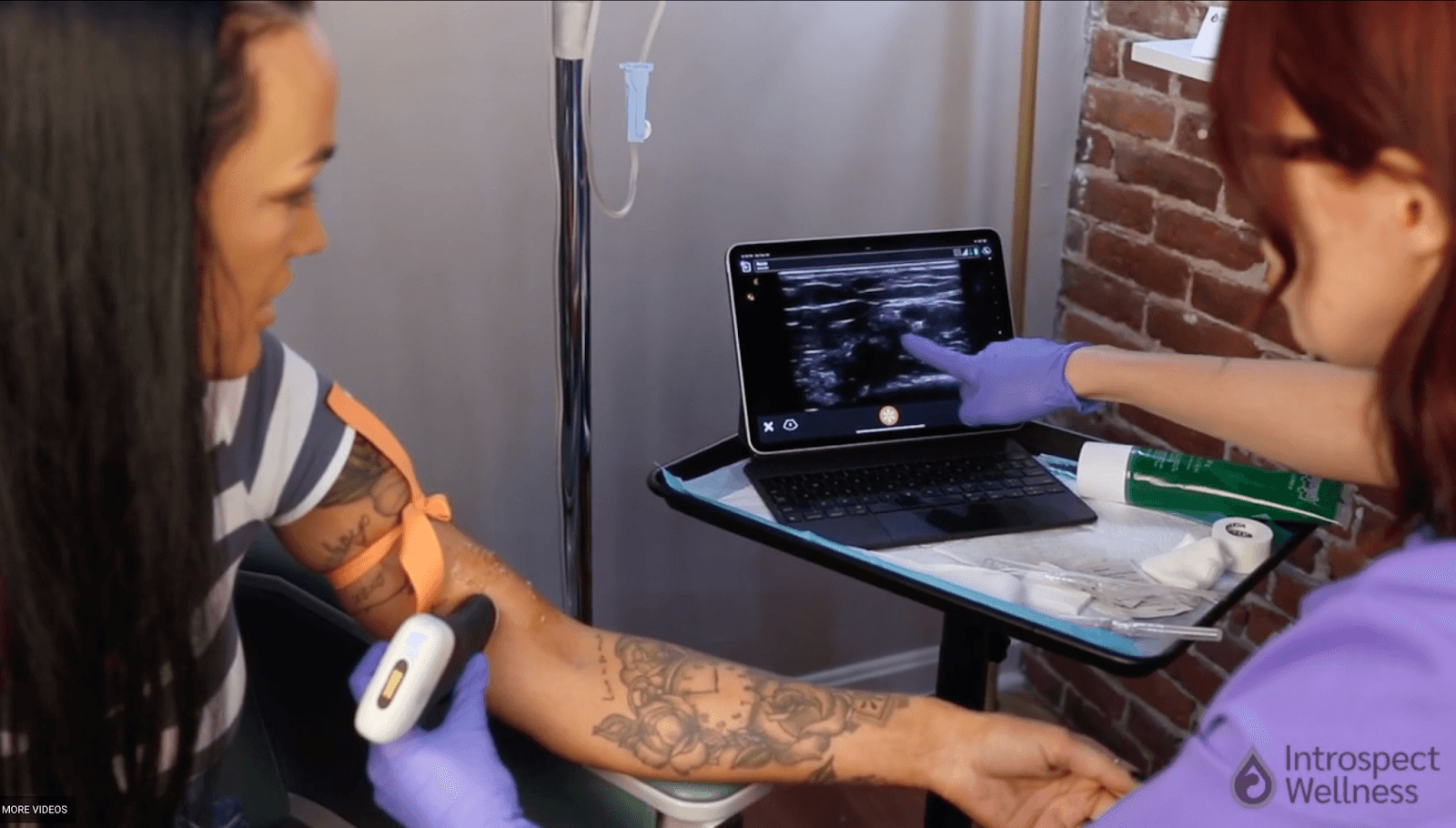
The stellate ganglion is a small cluster of sympathetic nerves at the base of the neck. During an SGB, a local anesthetic is placed next to it using real-time ultrasound guidance. This temporarily quiets the fight-or-flight signals traveling through those nerves. Many people describe it as a reset for a nervous system that’s been stuck in high gear.
Why might that matter for POTS? Many people with POTS, especially after COVID-19, appear to have a sympathetic nervous system that stays revved up. Early reports suggest SGB may ease symptoms like a racing heart, brain fog, fatigue and poor sleep in some of these patients. A 2022 case series and a 2023 study of 41 patients with long COVID, many with POTS-like symptoms, both reported improvements after SGB.
We want to be clear: this research is still early. Most of it comes from case reports and small studies without a placebo group. Stanford is running a small placebo-controlled pilot trial of SGB for POTS, with results expected soon, and a second trial is starting in Europe. SGB is not FDA-approved for POTS, so using it for POTS is off-label. We’ll talk through what’s known and what isn’t before you decide.
Our SGBs are performed by Jessica Starr, MS, APRN, CRNA, a nurse anesthetist with years of experience in nerve blocks and ultrasound guidance. You can read more on our stellate ganglion block page, including what to expect at your visit and photos of what the block looks like right afterward.
New to SGB? Start with our guide, What Is a Stellate Ganglion Block?, for a closer look at how it works and what it may help with.
Can you combine IV infusions and SGB?
Yes. Because the two treatments work in different ways, some patients use both. IV fluids can help when blood volume is the bigger issue, and SGB targets the nervous system overdrive behind many symptoms. We’ll help you decide what makes sense for you, and we’re happy to coordinate with your cardiologist, neurologist or primary care provider.
Is this right for me?
IV infusions and SGB may be worth exploring if:
You have a POTS or dysautonomia diagnosis, or symptoms your doctor is evaluating
Your symptoms began or worsened after COVID-19 or another viral illness
You’ve tried fluids, salt, compression and medications but still struggle
You want options that work alongside your current care
If you faint, have chest pain, or have new or severe symptoms, please seek medical care right away. These treatments are not a substitute for a full medical evaluation.
Take the next step
If POTS is limiting your life, you don’t have to keep pushing through on your own. Book a free consultation with our team in Keene, NH. We’ll listen to your story, review your options and help you decide whether IV infusions, an SGB or both could be part of your plan.